


v3n6 From the Editors
By E. Bruce Watson | December, 2007
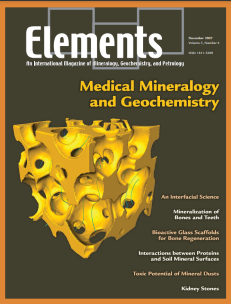
With this issue, we close our third year of publication. We are pleased with the recognition Elements has received in this short span of time, and we are committed to further improvements. As we reach this milestone, we thank all the guest editors and authors who have contributed their time and energy (see list on this page) since volume 1, number 1. Without them, Elements would not be here.
v3n4 From the Editors
By Mark J. Logsdon, Ian Parsons, Bruce Watson, Susan Stippand Pierrette Tremblay | August, 2007
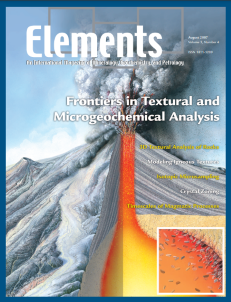
The editors met on Thursday June 28 at the Frontiers meeting in Cambridge, England. Rod Ewing, founding editor, attended part of the meeting, and we welcomed his sage input. Although we have regular conference calls throughout the year, face-to-face meetings are invaluable: nothing replaces sitting around a table and bouncing ideas back and forth. The main items on the agenda were solidifying our line-up for 2008, and indeed three new themes were confirmed: nanogeoscience, platinum-group elements, and carbon dioxide sequestration. Watch for our December issue when we will present an overview of the 2008 topics. Many proposals and ideas for thematic issues have been submitted in recent months, and these will be considered for the 2009 line-up.
v3n2 From the Editors
By Ian Parsons, Bruce Watson, , Susan Stipp, and Rod Ewing | April, 2007
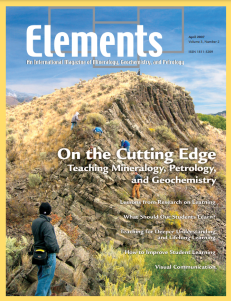
Unlike many scientific journals, whose editors have been known to linger in harness for several decades, Elements has the wise policy of refreshing its team of principal editors every three years. Mike Hochella is the second of the principal editors to go, after two years as editor following our first issue at the end of 2004. When Rod Ewing first approached Mike to become one of the founding editors of Elements, he politely declined. A few days later, Rod phoned him again and persuaded him to join the editorial team. We are certainly glad he did so. The founding editors first met as a group, along with managing editor Pierrette Tremblay, three short years ago, in April 2004, at Rod Ewing’s base in Ann Arbor, Michigan. At the time, we had Rod’s strong, well-formed vision of the aims and general form that the magazine would have, but an enormous amount of detail had to be filled in, from hard to-articulate but crucial factors, such as the level at which thematic contributions should be pitched, to nuts-and-bolts issues, like the style of artwork and the punctuation of references.
v3n1 From the Editors
Susan L.S. Stipp, Ian Parsons | February, 2007
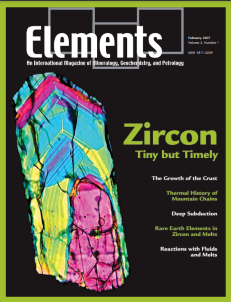
It is with great pleasure that the Elements editorial staff welcomes Professor Susan Stipp, Geological Institute, Copenhagen University, Denmark, as our next principal editor. Her term began officially on January 1, 2007. She replaces outgoing editor Michael Hochella. Susan brings a wealth of scientific and international experience to her new role. A Canadian by birth, she obtained her BS and MS degrees from the University of Waterloo, where she did graduate work in hydrogeology in one of the most famous natural water science groups in the world. Her PhD, which focused on mineral surface processes relevant to groundwater remediation, was obtained from Stanford University in 1989. Since that time, she has carried out research and taught at the University of Geneva and ETH of Lausanne, Switzerland.